
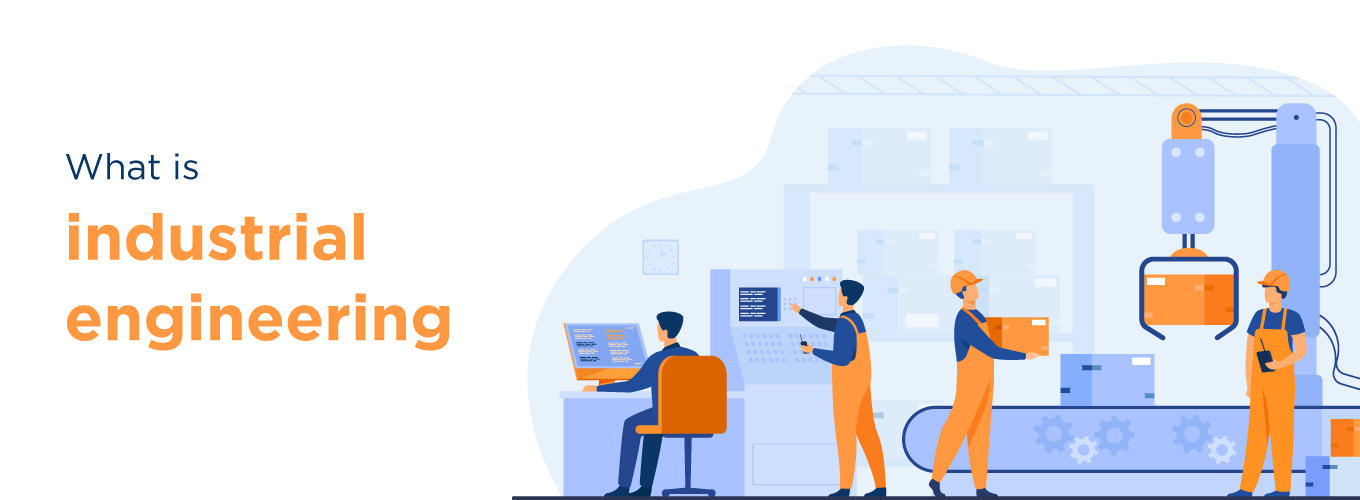
Industrial engineering is a very attractive field of study because it offers the best of both engineering and business. Industrial engineering is all about the design, analysis, and control of operations in production, service, and systems. According to the U.S. Bureau of Labour Statistics, the job market for this field is poised to grow by 10 percent between 2021 and 2031.
Earlier, an industrial engineer would oversee a manufacturing plant and be involved with the operating efficiency of the workers and machines. However, in today’s world, industrial engineers are concerned about productivity and the technical problems of production management and control. Their responsibilities cover designing unit operations and controlling production and service systems.
Industrial engineers integrate physical, financial, economic, and human components to achieve specific objectives. Their responsibilities include production planning, quality control, inventory management, equipment and warehouse oversight, materials handling, and optimizing plant layouts and workstation designs.
What Does an Industrial Engineer Do?
An industrial engineer works to improve processes or designs that are more efficient and reduce the wastage of money, time, resources, manpower, and energy while following safety standards and regulations. Industrial engineers use their knowledge of mathematics, physics, and social sciences to analyze, design, predict, and evaluate the results and roadblocks of processes and devices.
For instance, an industrial engineer could be responsible for ensuring that your mobile phone fits into your pocket or has processing power without overheating. Industrial engineers offer various things to the world. They are fully responsible for a product that does not work well.

Since the systems that industrial engineers work with are so complex and large, they need knowledge and skills in various disciplines. In addition, industrial engineers must be able to work well with people, have good interpersonal communication, and be good at problem-solving. They also use their knowledge and skills to improve systematic processes using statistical analysis, work on design, planning, quality control, operations management, and computer simulation.
Industrial engineers design new equipment and specify requirements for externally purchased machinery to ensure compliance with standards. They may repurpose existing equipment, develop new processes, and create tools and procedures to enhance efficiency. They design equipment and facilities using computer-aided design (CAD) systems, while computer modeling helps them simulate processes and optimize supply chains to improve efficiency and reduce costs.
Where Do Industrial Engineers Work?
Industrial engineers work in a range of environments. They could be in offices or various other settings that they are tasked with improving. This could include watching a process in a factory or examining workflows in a hospital. They will then take the data, examine it using a computer, and solve the problems.
Industrial engineers are highly skilled and can work in managerial and technical positions. Their employment settings could include consulting, engineering, research and development, service industries, logistics, manufacturing, and trade.
Why Should I Study Industrial Engineering
Pursuing a Bachelor’s or Master’s degree in industrial engineering offers several advantages:
- Engage in a dynamic field: With evolving technology, industrial engineers continuously adapt and innovate to stay ahead.
- Encourage creative problem-solving: During undergraduate studies, students explore multiple approaches to finding solutions, fostering innovation.
- Enjoy flexibility: Industrial engineering allows specialization in either technical or management-oriented paths, providing a customized learning experience.
- See real-world impact: From laptops to scarves, industrial engineers contribute to designing and optimizing everyday products and their lifecycles.
Career Path of Industrial Engineering Graduates
Industrial engineering is a highly sought-after specialization, offering diverse skills and career opportunities in both technical and managerial roles. Professionals in this field can work in various industries, including:
- Service sector
- Logistics and supply chain management
- Manufacturing industries
- Consulting and engineering firms
- Research and development organizations
- Wholesale trade
With the right education, industrial engineers can efficiently manage tasks such as:
- Selecting an optimal location for a production plant to minimize transportation costs for finished products
- Strategizing cost-effective global product distribution
- Evaluating and implementing hospital information systems to enhance the quality of patient care
The Future of Industrial Engineering: Technology-Driven Transformation
Industrial engineering has expanded beyond its traditional focus on assembly line layouts and workforce productivity. It now emphasizes reducing waste in time, costs, materials, energy, and resources. Industrial engineers use computer simulations and system modeling to analyze and enhance efficiency. Additionally, machine learning and data science innovations are transforming operations, streamlining workflows, and boosting productivity. As the field advances, the demand for skilled industrial engineers continues to rise across diverse industries.
Frequently Asked Questions
Industrial engineering tasks include production planning and control, quality control, inventory, equipment, warehouse, and material management.
Industrial engineers assess current manufacturing processes to identify areas for improvement, optimize production schedules to enhance efficiency and implement quality control measures to minimize waste.
Based on data from Glassdoor and Indeed, industrial engineers in India earn an average annual salary of approximately ₹5,00,000. Salaries typically range from ₹3 lakhs to ₹8 lakhs, varying by experience and location. Cities like Bengaluru and Delhi offer higher compensation for industrial engineers.
